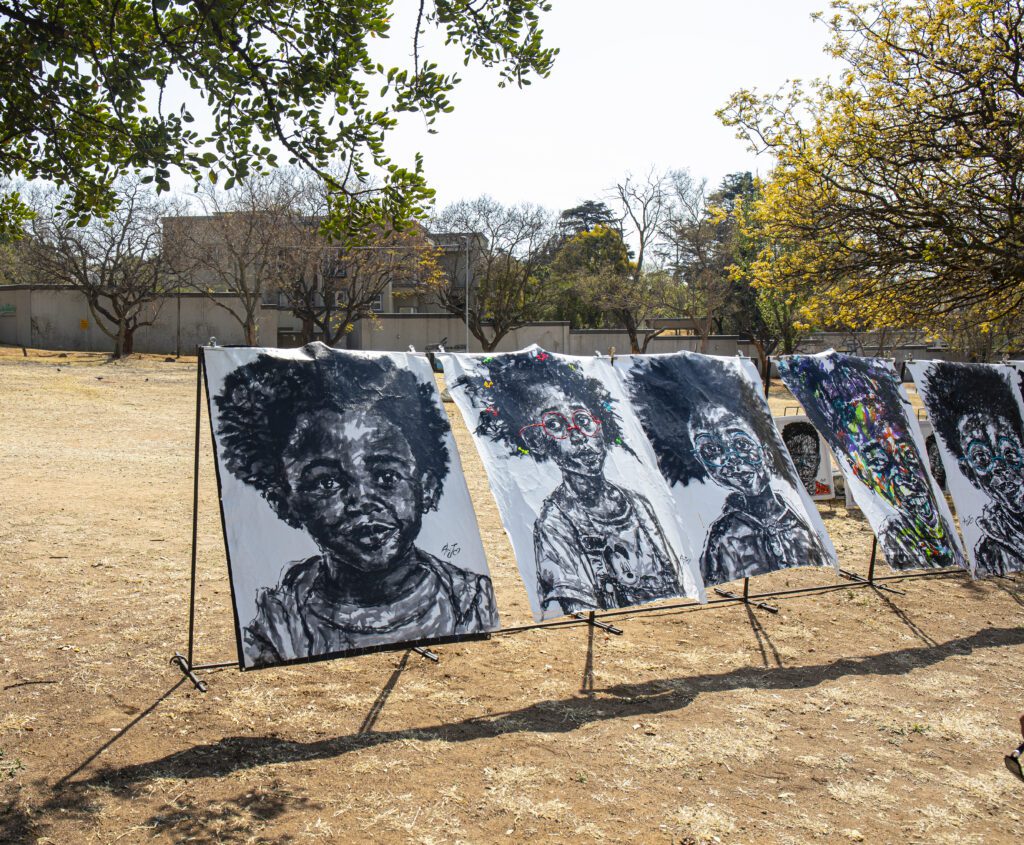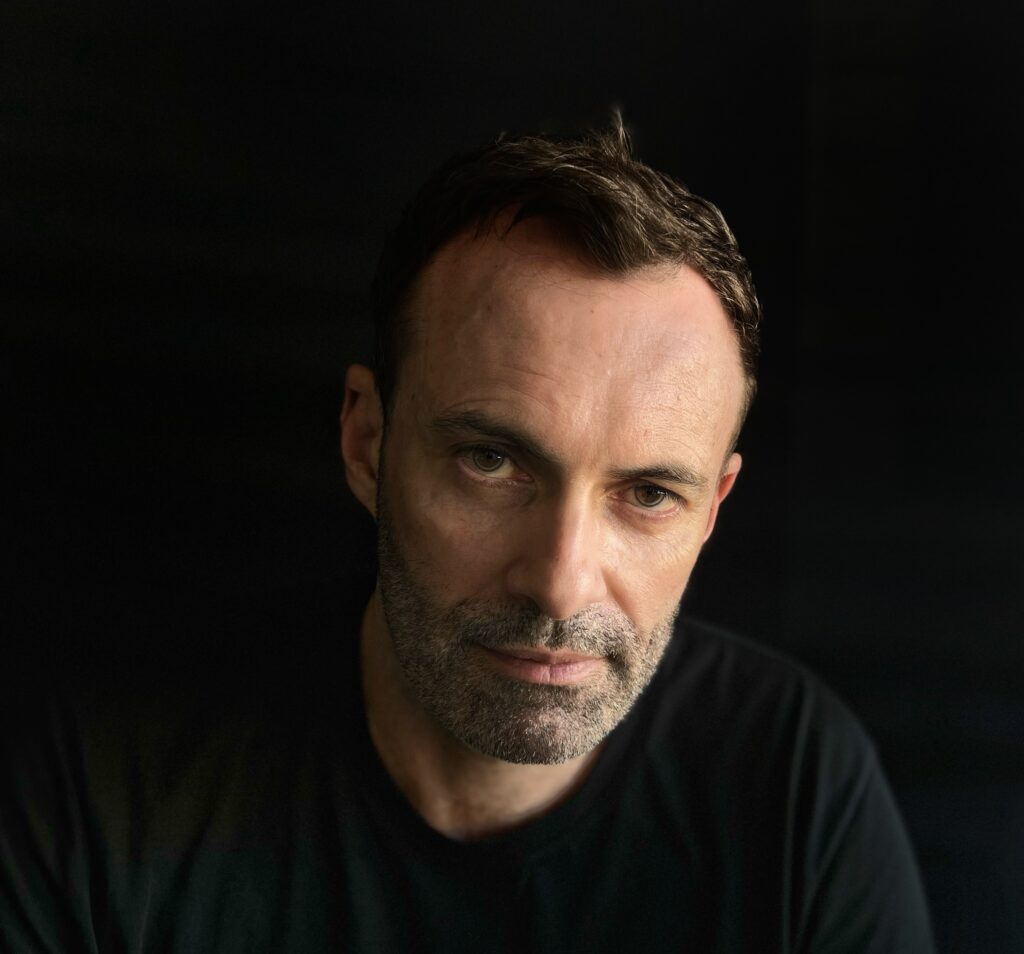
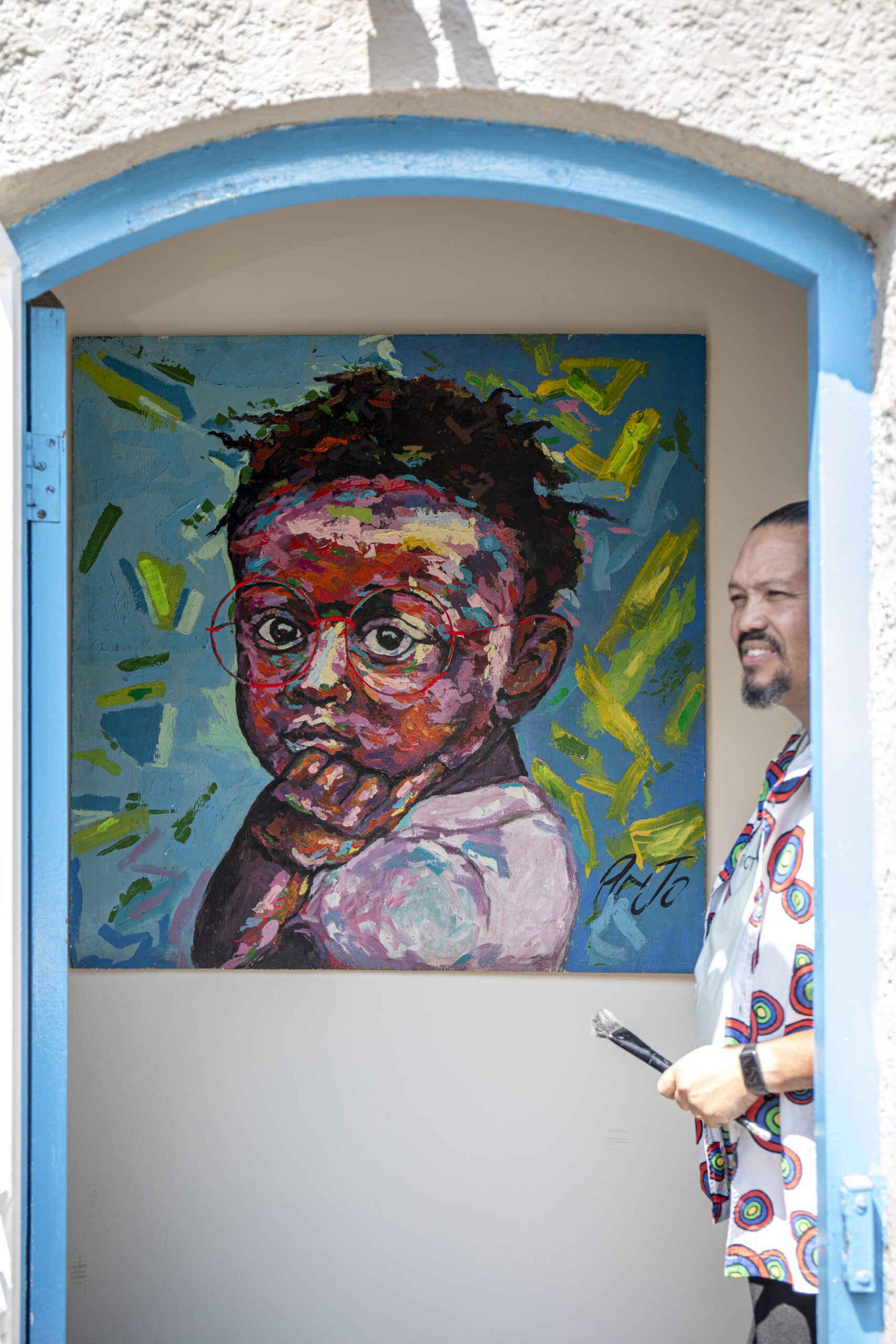


I had to speak to Anjo after seeing one of his striking sketches on the wall of a house in Sandton — a portrait of a beautiful child with large, curious eyes.
When I later met Andre Joseph, known as Anjo, I connected with him instantly. It may sound odd, but the only way I can describe it is this: while we spoke, it felt as though I could sense his heartbeat.
Anjo has a huge heart for his work, fuelled by passion born of adversity. Even more compelling is his deep care for other people. His commitment to telling the stories of often-overlooked individuals, such as waste pickers, is powerful.
“Thank you for talking to me, brother. I have enjoyed our chat. Thank you for taking an interest in my art; I appreciate it. But what I think is important are the waste pickers. Please dedicate this story to them.”
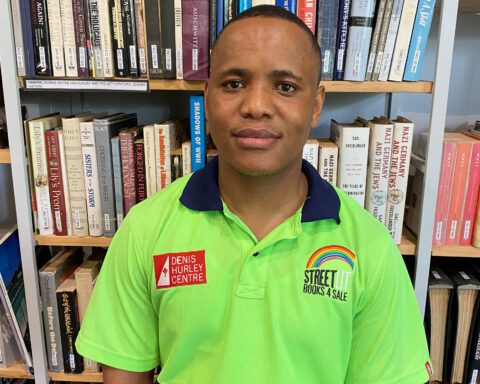
Anjo wants his art to inspire social change. His portrait of Malusi, a waste picker, and the many encounters that shape his work show how his art transcends traditional gallery spaces. It becomes a platform for the frequently unseen.
For Anjo, art is more than a career — it is a way to connect with people and celebrate humanity. At 49, the Johannesburg-based artist sells his work from a roadside gallery, but his journey has been shaped by moments of profound human connection.
One such moment was an accidental meeting with Nelson Mandela in 1992.
It was Youth Day at Zoo Lake. Anjo and his friend Alistair jumped a fence and snuck in early, where they unexpectedly encountered Mandela and his bodyguards. Anjo didn’t immediately recognise him, but Alistair whispered, “It’s Nelson Mandela!” The brief exchange left a lasting mark.
“Madiba told us that if we wanted to make a difference in South Africa, we had to create something. We had to build something. He said we must live our lives well and avoid drugs. He said, ‘The country’s changed. You’re free. Make the best of your life.’ I will never forget that — and his huge hands.”
Anjo’s art begins with mental pictures inspired by the diversity he sees daily. “We must embrace it all; the only way to do that is through human interaction.”
Growing up in a former coloured township on the edge of an African area, and later moving to a formerly white suburb, shaped his worldview. He actively seeks out people who are different from himself.
“Diversity is this country’s strength. Even with challenges like crime and corruption, you must reach out to one another. If you focus on the negatives, you will be disappointed and won’t survive. Reach out.”
While he knows he must earn a living, Anjo resists the idea of art created purely for profit. “I want people to be educated by my art, for their minds to travel.”
Though talented from childhood, Anjo was unable to pursue art full-time after school. He worked in a corporate job and later started a car parts business, which he still runs. He would visit art galleries, longing for an exhibition, but often felt judged — not for his art, but for his appearance and the car he drove.
That experience shaped his outlook. “I try to treat people like champions.”
Another formative moment came in Delta Park, Randburg, where he met a Jamaican artist who had lived out of his car in the US for three years to save for an exhibition. Inspired, Anjo realised he needed greater exposure and set up an informal gallery in Hurlingham.
Life on the streets brought him into contact with many interesting people. He befriended a wire artist who walked 15 kilometres to work every day.
“I gave him a bicycle and a satchel, and it changed his life — and mine. He fed his family, and he sold some of my paintings.”
“I’ve been on a hard journey, but the streets have taught me that we are happier when we give. And that’s what I want to do — with my art and my life.”
One of Anjo’s latest missions is to support waste pickers.
“I deeply respect their hard work. That’s why I painted a portrait of Malusi, the waste picker. He is amazing. He has put his two daughters through school and built a house by selling waste. I hope Malusi’s picture raises awareness about the lives of waste pickers.”