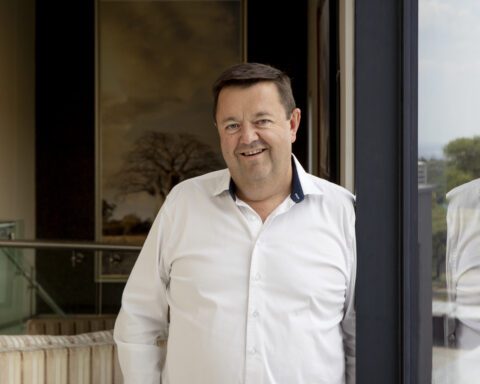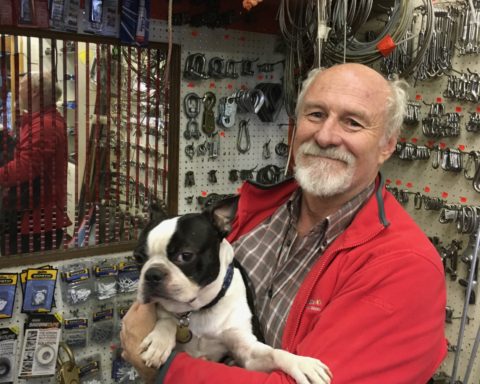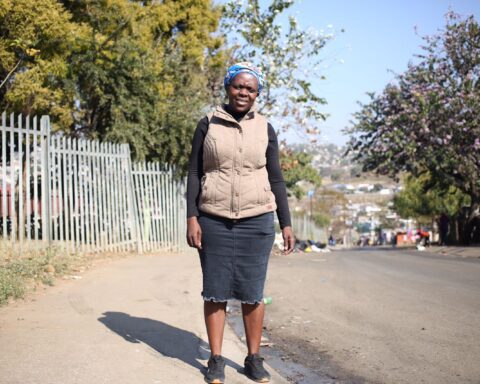

LATE in 2024, two kindred spirits met in a roadside encounter in Zululand.
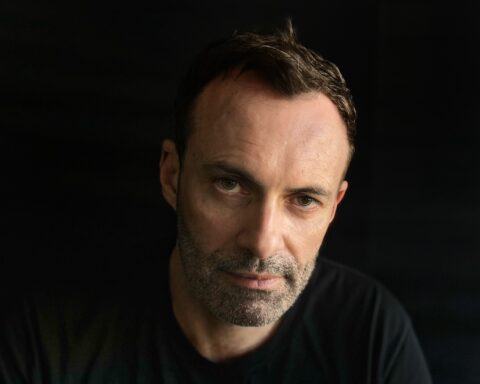
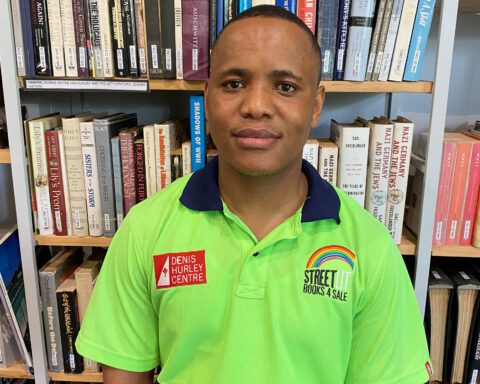
The tale of Lucky Nxumalo and Basil Stathoulis is one of hope borne of curiosity, a heartwarming story of how kindness counts.
Driving towards Tembe Elephant Park, near the Mozambique border, Basil’s car slowed down over the rutted metal cattle grids in the village of Mbazwana. It is the district of Umhlabuyalingana, which Basil says is known for powerful magic.
The road through the flats from Hluhluwe to Tongaland is one leg of a long journey from Durban that takes over four hours and where the Isimangaliso Wetland Park unfolds in all its natural splendour.
Near Lake Sibaya and Kosi Bay, this land is wild, untamed and exciting.
Mbazwana’s rural roadside is dotted with homesteads and stalls.
Vendors sell everything from arts and crafts to fresh produce and metalwork.
Basil spotted a chequered metal chessboard amidst iron braai stands.
He pulled over and found Lucky, who introduced himself and invited Basil and his friends to play chess.
A simple act of hospitality that changed their lives.
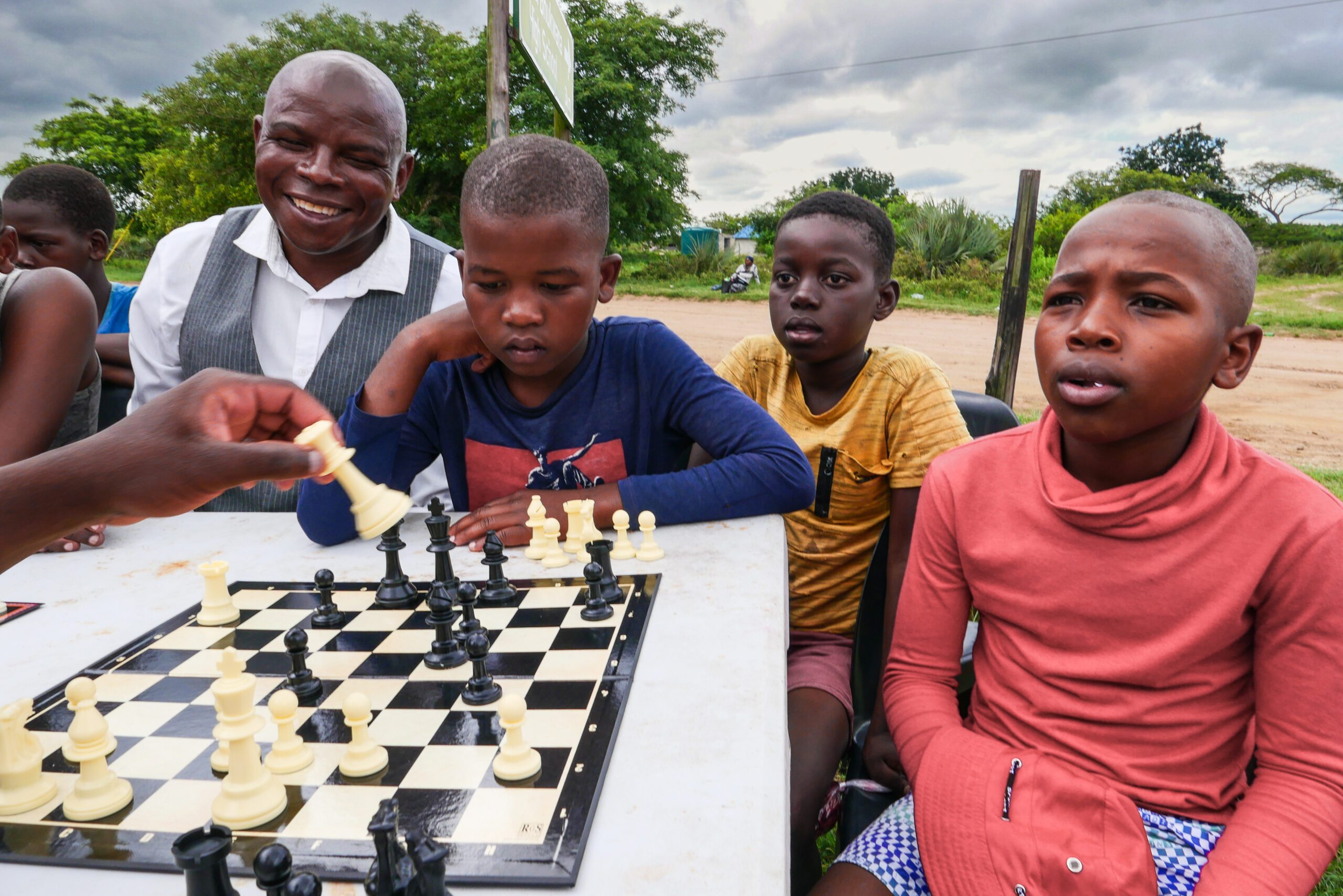
Lucky explained how he taught children to play chess because it is more than a game.
It is a tool for growth that can teach valuable skills to navigate the complexities of life.
“Lucky is a very bright guy. He was a laboratory technician, but he’s done a lot in his life, and he’s regarded in the community as a multi-skilled man.”
His nickname is “Majazana”, from the Zulu word “ijazi” or coat, which can also mean academic gown or the robe worn by lawyers and judges.
On Basil’s ensuing trips north he brought Lucky more and more chess sets to scale up his free, open-air chess lessons.
Lucky was overwhelmed by the gesture, and as the men got to know one another better, he told Basil more about himself.
During a nasty bout of asthma, Lucky thought he was going to die.
“The oxygen didn’t help. I thought I was going, and I needed to say a prayer. I said to God: ‘You sent me to do a job in this world, and I didn’t do it.
Whatever punishment you will give me, I must accept it. But God gave me a second chance. My calling is to teach. The best thing I can teach anybody is to think for themselves so they can be free.”
Lucky chose to teach chess.
This is a potted history of the game offered by a US company that sells fancy bone chess sets for R30 000.
According to the House of Staunton, chess originated in India about 1500 years ago. The pieces represent military units and royals in battle: the infantry, cavalry, generals, kings and queens. The game spread to Persia and Europe, and rules and pieces were modified and renamed to suit local custom.
The first world chess championship was in 1886, and in 1997, the computer Deep Blue beat world champion Garry Kasparov in a game renowned for
strategy and analysis. Basil is an orthopaedic surgeon, an avid photographer and traveller. He was intrigued by how Lucky explained chess concepts to beginners in Zulu.
“Chess is widely embraced as a marker for improvement at school. Research in psychology and educational journals shows how children who play the game can get better results. Lucky’s magic is contextualising the game, not in traditional battle terms. Why would you be interested in chess if you aren’t a soldier?
“Lucky explains it in a traditional Zulu context, taking into account the ancestors. The king is the family’s leader, the mkhulu, and the queen is the gogo.
The children are the pawns. The aim of the game is to win territory. Lucky has demilitarised it and made it accessible. For example, ‘check’ became ‘Pasopa uMkhulu’ (beware, respected elder), and ‘checkmate’ is translated to ‘Lala phansi uMkhulu’ (sleep peacefully, respected elder). By removing war imagery and integrating cultural respect, Lucky has transformed chess into a game deeply embedded in local heritage.”
A friend of Basil’s donated R25,000 to build a giant chess board in Mbazwana with paving and Lucky fashioned tables and chairs from wooden pallets. Other friends helped by donating woodworking tools. The garden, its boundary marked off by old tyres and upturned beer bottles, has become the home of the newly named Hlulabantu Chess Club.
Hlulabantu means we will not be defeated. The village’s latest attraction is close to a local shebeen, and Lucky has diplomatically avoided conflict between thinking chess players and many mindless pub patrons.
“Lucky is inspirational, and he wears that cloak very positively. He and the children he teaches deserve a lot more. Lucky’s main source of income is metal work, but when he’s not doing that, he’s on the side of the road teaching chess or running competitions and tournaments at schools and shopping centres on Saturdays.”
For Basil, befriending Lucky has been a tonic.
“I have always been a believer in the rainbow nation, but after the looting and state capture, I became very negative. I have worked on various outreach
projects as a doctor, and I know the only way to change is to do something, to get involved with people who are sidelined. I met Lucky by chance, but our friendship has been so positive.”
Basil has witnessed the trauma of illness, injury, and systems broken by greed. He isn’t starry-eyed about the Hlulabantu Chess Club, but mindful
of South Africa’s need for sustainable healing and care, he believes it represents hope. Many would say it is a tiny light shining against a big backdrop of despair. But Lucky demonstrates the power of humanity and culturally appropriate care. Some of his chess club members are masters in the making, but others see Lucky’s bright yellow car parked at the roadside and are simply drawn to friends and snacks. The club’s garden buzzes with camaraderie, and tournaments offer modest prizes.
A kilogram of brown sugar is a highly sought-after prize. Lucky’s modest initiative has harnessed hope in a rural, deprived area without much economic prospects or government services. The poetry of the Hlulabantu Chess Club is absorbing. Chess is the art of outmanoeuvring one’s opponent, but
in Lucky and Basil’s hands, in a country still scarred by racial division, the game of adversity has become a bridge connecting people.
Many wealthy people in 4×4 vehicles drive through the area, towing boats to go fishing. More and more are slowing down to look at the chess club or even stop for a game.
Black and white traditionally denotes opposition on the chessboard, but Lucky says his friendship with Basil symbolises harmony, collaboration, and mutual respect.
Their club has the potential to help foster discipline and the power of strategic thinking. The goal is not victory over another but self-improvement and
growth. Lucky says the club’s survival, sustained by a few donations, will have to mimic the strategy and foresight that the game demands. Each move must be calculated, and every resource must be maximised to build skills and nurture talent.
For the friends, the club celebrates learning and community that might foster a sense of belonging beyond the chessboard.
Of course, like any chess game, the club (and South Africa) needs patience, care and thoughtful planning.