
This is a story about a modest man on an amazing mission. It will likely leave you wide-eyed, dumbstruck, slack-jawed and utterly inspired.
Marc Germiquet cried on Christmas Day 2024. The 51-year-old was alone, a speck in the Atlantic, exhausted from rowing 18 hours a day. Fourteen days earlier, he had left an island off Morocco/Western Sahara, headed towards Puerto Rico. On Christmas Day, he battled against the wind, the current and the waves – and yet he shed tears of joy.
Marc’s story is about how you frame your problems. On 25 December, he rowed as hard as he could but barely made a knot. Finally, he got his speed up to two knots (less than four kilometres an hour).
“I had these crazy, stupid tears running down my face. It was a relief. I was so happy I got over two knots. That was the hardest day of the trip.”
The World’s Toughest Row is from La Gomera in the Canary Islands to Antigua in the Caribbean. Marc’s journey was 4 980 km. It took 43 days, seven hours and 21 minutes.
What possessed him to subject himself to a solitary, salty hell?
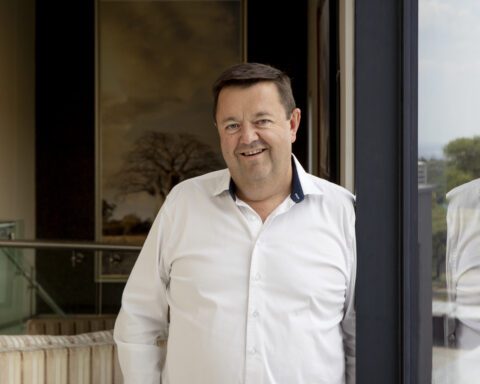
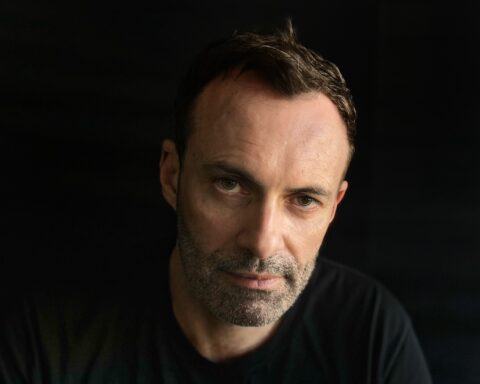
A quick summary before we go there. Marc weighs 80 kg and is 5 foot 8 inches tall. He has an easy smile, a sinewy, muscular body and a precision about him that isn’t stiff, but gives the distinct sense of a man with purpose.
He is a businessman, extreme athlete, aviator and father. Before attending Pretoria Boys High, he was diagnosed with dyslexia. Marc is the second of four children. His father, Dan, was a Swiss geologist who introduced him to the joys of the wild on field trips.
Marc didn’t shine academically and was an average sportsman. But scouting changed his life.
“At school, I was a sea scout in Pretoria. It was better than being called a dam scout. We had an unbelievable facility at Hartebeespoort Dam – a massive garage full of toys: sailing boats, rowing boats and kayaks. The scouting master was phenomenal. Every weekend we were either hiking, climbing, rowing, sailing or on some kind of adventure.”
Scouting was much more important than school, and Marc got Springbok honours at 16, which perfectly equipped him for his first job: a two-year stint as a game ranger running bush tours through Southern Africa. He left that to work on a cousin’s farm in Switzerland for a year.
Across Africa
There he saved enough money to buy a 1969 MAN tipper truck that he modified to drive through Africa. He was 21, in the time before satellite phones, and navigated his safari back to South Africa using a compass and maps.
He had pre-sold legs of the journey to tourists, never lost his way, arrived on time and stayed in touch by sending telexes from embassies along the way.
Back home, he swapped the MAN truck for a Land Rover 101 (without a spare wheel) and started Bush Ways, his tour-guiding business.
He set up shop in Botswana, because parts of the country were so untouched and remote it felt like travelling back in time.
“It was properly wild – no humans, just animals. I could drive for two weeks without encountering another vehicle.”
Marc’s pluck and love of the wild helped him grow the business.
“When you are 21, you don’t think of the consequences, you just do it. I didn’t have any formal education in anything, so I had to learn as I went along – from accounts to reservations to being a mechanic and a chef.”
He later took on partners. Today the company has a fleet of 60 vehicles, 200 staff and eight lodges and camps, controlled from headquarters in Maun, catering for about 15 000 tourists a year.
The company also started a foundation because its commitment to conservation is rooted in people.
“Conservation has got nothing to do with animals. It’s got everything to do with people. If you don’t educate people, you won’t have any kind of conservation or desire to look after wildlife – it will simply be seen as a commodity.”
The most effective education starts early, and the foundation has built two pre-schools.
In 2010, Marc saw extreme adventurer Peter van Kets row alone and unassisted across the Atlantic. His 5 438 km trip took 76 days.
Marc wanted to raise funds to build another pre-school. A prerequisite to enter what is now called the World’s Toughest Row (previously the Talisker Whisky Atlantic Challenge) is a fundraiser.
The race started in 1997. Its history makes for fascinating reading. In 1896, two Norwegians, George Harbo and Frank Samuelsen, became the first recorded people to row across an ocean, from New York to England.
According to the LinkedIn profile of adventurer Bernie Hollywood, 197 people have rowed solo across the Atlantic in modern times. His own crossing took 109 days and included 17 storms, multiple capsizes, equipment failures, a broken leg, pressure sores, gangrenous infection, anxiety and hallucinations.
Across the Atlantic
In January 2025, Marc was the first solo rower across the finish line in a race of 38 boats crewed by 110 rowers. This included six solo rowers, 11 pairs, four trios, 15 fours and two five-person teams. Dan-Dan, Marc’s boat, was 11th past the post.
Game ranger David Carson, in a podcast with Marc, explores the quest in depth. Mentally, Marc knew what he had got himself into. The race had been 14 years in the making. He had spent the previous two years working on his boat in the Howick backyard of his partner, Bronwen Schoenfeld.
The R2,5 million boat was built in Holland by Mark Slats and The Ocean Rowing Company. Marc christened it in memory of his father, Dan.
It looks about the size of a very large porpoise.
The seven-metre-long, streamlined craft has carbon-fibre oars and foot-steering pedals connected to a rudder. It has rear and front cabins for sleep, storage and flotation. Solar panels power onboard electronics: GPS, communications and a desalination unit. Multiple antennae and sensor masts bob from the top.
Once loaded with almost 100 kg of food, Dan-Dan weighed 650 kg.
Throughout the journey, Marc was tethered to the boat because of the huge Atlantic swells. This proved useful when he was knocked overboard on day five by seven-metre waves.
Every four days he also dove into the sea to scrape shellfish and other organisms off the hull to reduce drag.
He wasn’t fazed by the isolation or the danger. A seasoned paddler, Marc has paddled the Okavango Delta twice and completed hundreds of surfski races. Before the big race, he rowed Dan-Dan 700 nautical miles off Durban (1 nm = 1,8 km).
During a training session near Richards Bay, he wisely called the National Sea Rescue Institute for assistance. An NSRI press release captures his attitude well.
Marc had left Durban the day before and was expected to turn around at Richards Bay, but travelled faster than planned and the wind direction changed sooner than forecast. This put him on a trajectory towards Mozambique.
“He was safe and in good spirits,” the release noted, “and landing up in Mozambique would have been no problem for him, but we were happy to assist.”
Marc asked to be towed into Richards Bay because it was impossible to row against the wind and swell into the harbour.
If Goldilocks met MacGyver
To say Marc internalised the Scout motto “Be Prepared” would be a majestic understatement. Bronwen calls him Goldilocks – after the fairy tale where everything must be “just right”.
His attention to detail is extreme. He used an angle grinder to smooth every sharp edge on Dan-Dan so he wouldn’t be cut if he fell. He lightened the anchor the same way.
Bronwen’s insight is telling.
“Marc prepped so well and there is nothing he can’t fix. I worried he might slip and knock his head and drown, or push himself to destruction because he is mentally strong. But by race time, I was calm. He had thought about every scenario and how to limit the variables. Marc is pedantic, and I’ve never seen him panic.”
Marc doesn’t groan in the face of adversity. He capsized during training off Durban and was strengthened by the experience.
For Marc, “every problem is a solution in disguise”.
Four days from the finish, he realised his rudder was loose.
“I felt like I didn’t have proper control, like something had taken a bite out of my rudder.”
Drawing on his earlier capsizing experience, he deployed a para-anchor to stabilise the boat, dove under and dismantled the rudder in heavy seas. He drilled, epoxied and reassembled the part while waves thrashed the hull.
“It was insane,” he says. “And I knew I was losing time with the other boats on my tail.”
Focus
Marc spent countless hours understanding how best to use the rudder to harness wave power. Was it better to take one deep stroke at the bottom of the wave, or several sharp strokes to break surface tension?
“I was never bored. I was constantly engaging with the surf to see how I could take the energy of the water to propel the boat forward faster.”
Marc rowed an average of 18 hours a day. He spent one hour off the oars daily to prepare food, harvest water and wash.
A daily body wash is critical at sea.
“The salt eats your skin. I had bleeding welts on my bum. On day five, I took my pants off and rowed naked the rest of the way.”
He slept in short bursts – 40 minutes of deep sleep, then drifting in and out between rowing shifts. The solitude didn’t bother him. It sharpened his focus.
“I knew what I had got myself into. I had prepared for this for years. I felt good.”
Bronwen sent regular Garmin messages confirming his position, helping him build a mental map of progress. Her handwritten journal, plotting his position, became a lifeline.
“It’s just water out there,” Marc says.
Weather reports from business partner Heiko Genzmer and messages from his sister, relaying global support, buoyed him.
Marc likens the experience to watching guests arrive in Africa for the first time.
“You see them transition back into liberated cavemen.”
Marc was prepared mentally, emotionally and physically – and he wanted to win.
“It’s a race. My goal was to be able to say I could not have been a minute faster.”
For him, efficiency and fast problem-solving mattered more than obstacles.
“A race, like life, is not about the obstacles, but how you address them.”
The splits
Marc tracked his progress in 500-metre splits using a laminated chart converting time into speed. This allowed him to row smart, not just hard, turning an epic crossing into manageable, bite-sized goals.
The munchies
Marc took 98 kg of food, consuming between 6 000 and 8 000 calories a day and losing six kilograms over the journey.
Gluten intolerance ruled out most dehydrated meals. Instead, he lived on cold-water mielie meal mixed in three flavours, supplemented with protein powder, biltong, nuts and dried fruit. He drank about 10 litres of water a day.
He worked with South African nutrition company PVM (Proteins, Vitamins & Minerals), founded in the 1960s following research by the CSIR’s National Institute of Food Research.