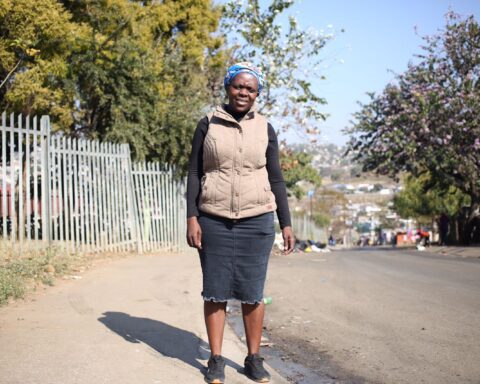


It’s good to have graceful green warriors like Ntswaki Ditlhale in a world screeching madly towards environmental Armageddon.
As much as you need activists to storm the Bastille, you also need bright, level heads to help people navigate pollution-choked climate change. The crisis is upon us, but many people simply don’t know where to start.
Ntswaki is a conservationist who heads up Triple-P: Partnerships for People and the Planet. This non-profit enterprise creates connections to address environmental injustices holistically and unlock green skills opportunities for underserved communities.
Central to Triple-P’s work is recognising marginalised communities as an asset in creating sustainable livelihoods and a healthy planet. You can’t build an eco-conscious society without collaboration. For Ntswaki and her team, it is all about symbiosis.
Take Diageo, the alcohol company that produces, distributes and sells brands like Johnnie Walker, Smirnoff and Guinness. Diageo uses a lot of water in Durban to make the hooch that so many like to quaff back. The company joined Triple-P in saving water as part of its corporate social responsibility.
Durban’s water losses are dire. More than 50% of the water supplied to the city is lost or regarded as non-revenue water — either leaking through pipes, stolen or not paid for. A Daily Maverick report noted that in July 2023, eThekwini’s non-revenue water losses stood at 65.6%.
Since 2022, Triple-P and Diageo have worked with 32 schools on a WASH (water, sanitation and hygiene) project. They fixed leaking taps and introduced water-saving systems. The original target was to save 17 million litres in five years.
They achieved that in just two.
The average school loses 800,000 litres of water a year to broken systems, which equates to about R43,000. That’s enough drinking water for 730 people every day for a year.
Ntswaki says most schools don’t have caretakers with plumbing skills to fix leaks. “So we helped by providing reliable contractors, drawing up maintenance plans and equipping caretakers with the necessary skills. Water saving and sustainability is a major educational component. Since we have been involved, the children have taken to badgering the principals. It has been fantastic to see them develop this environmental consciousness.”
Water is just one of several issues Triple-P tackles. Others include waste recycling, alien plant control, vegetable gardens, education, skills and enterprise development, and river and wetland rehabilitation. But the water projects have been the most illuminating.
Fixing school water systems gave children clean drinking water, hygienic toilets and dignity. At a school in Krugersdorp, close to a shack settlement, children know that if they are sick, school is a safe place with clean toilets and drinkable water.
Messaging around environmental health is often misguided or misdirected.
“More and more people are preaching the green gospel, which is great, but we often do it incorrectly. You can talk to a poor community in an informal settlement about cleanliness, but what are their examples? They don’t have refuse removal or water-borne sewage. Some communities settled near rivers discard their waste in the water, and the rivers wash it away. It becomes someone else’s problem. We don’t help people see the consequences of what they do.
“In some wealthy gated estates, people have no concept of waste separation; they think the waste miraculously disappears. Our messaging has to have meaning so that people want to get involved because they understand.”
Ntswaki tells the story of an informal community living near a wetland on the KZN south coast. Until residents understood how the wetland worked, it was a garbage heap and cesspit of mosquitoes and rats. When they cleaned it up, the wetland became a functional and tranquil sanctuary.
“Everything we do has an impact. We have to teach simple mindfulness.”