
Running around as a reporter in the pre-1994 era, I was starry-eyed and in awe of the anti-apartheid struggle. One of the stirring slogans of the day was “each one teach one”.
Ironically, many of those who led that noble charge to democratise learning — including ANC-aligned unionists — later presided over deep dysfunction in the education system. So how do we wrest back the power and ensure our future isn’t held hostage?
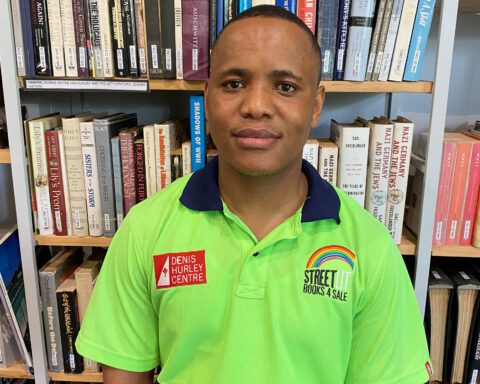
Part of the answer lies in the stories of heroic teachers like Andre Spies and Isaac Kubeka. But can a few dedicated teachers really turn around a system widely regarded as one of the world’s worst?
I asked UKZN education expert Professor Wayne Hugo what it would take to move South Africa from the bottom of the class to world-class. His first point was profound: education is one of humanity’s most powerful tools for improvement.
“Education is a mechanism for change,” he says.
It is a vital transfer of knowledge and values — a precious instrument for survival and advancement. Through mathematics, we give our children command of the universe’s language. Physics teaches the rules of that universe, chemistry reveals how materials combine, and biology unlocks the secrets of life. Geography offers an understanding of Earth’s beauty, while history chronicles our journey to the present. Our home language celebrates cultural heritage, art unleashes creativity, and life orientation guides healthy, ethical living.
“Education introduces our children to existence’s wonderful complexity, preparing them for specialised roles while teaching them to live and cooperate with others. Teachers love and cherish this responsibility of passing knowledge and values across generations.”
Great teachers make learning happen regardless of circumstances. “Their focus is, ‘What can I do better?’ They don’t blame the government or inadequate resources. They recognise the one variable they can control is themselves, so that’s where they invest their energy.
“When teachers start blaming external factors for poor learner performance, they risk becoming passive, doing only the minimum while absolving themselves of responsibility.”
This problem is often worsened when unions use education as a patronage network to secure teaching and leadership posts for members, where promotion is based on union affiliation rather than excellence in the classroom.
“It sets up a stark contrast in South Africa,” Wayne says. “For every teacher striving daily for excellence, another merely collects a salary and does a job protected by union membership. Excellence becomes threatening because it exposes mediocrity.”
He argues that South Africa has cultivated a minimum-standards culture — reflected in the 30% pass mark. Despite spending more on education as a percentage of GDP than any other African country, many learners leave primary school unable to read or write for meaning, while unionised teachers remain secure in the belief that this is not their fault.
“That doesn’t mean South African education doesn’t face genuine challenges,” Wayne adds. “We do. But when substantial resources and infrastructure are already in place — far more than in many countries on this continent — the most powerful change starts with teachers asking, ‘What can I control? How can I make a difference?’ rather than surrendering to a cycle of blame and resignation.”