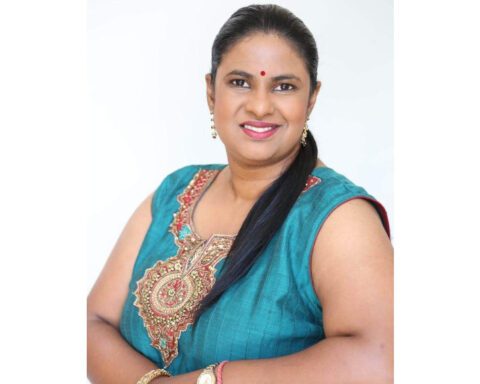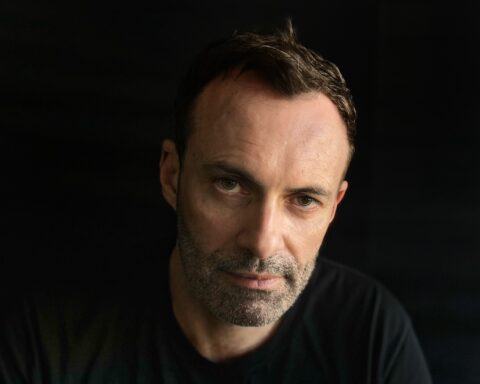


Antoinette McDonald is a writer, photographer and journalling coach who recently published a book on journalling. Ukwazi Life spoke to her.
What happens at a journalling workshop?
The workshops always include an introduction to what journalling is (and isn’t), a glimpse into the history and brain science behind it, and a look at why self-awareness is essential for humans to flourish. Journalling sharpens that awareness. I share practical tools that got me journalling. It helps people find their words.
I’ve been running them for almost 10 years – sometimes in small groups of eight, sometimes with teams of 25 or more. I’ve led one-off sessions and multi-day retreats.
What do you mean by “find their words”?
Finding our words matters. Our words create the world we live in.
When I was pregnant with my first child, my son Samuel, 15 years ago, a friend who is an artist asked if she could paint the world on my belly at my baby shower. It was a beautiful picture of a profound truth: the words we speak over our children become the worlds they grow up in.
Fourteen years later, that baby has flourished into a beautiful young man; growing under the shade of encouragement and affirmation we’ve intentionally planted for him and his sister. Words like: You are kind. You are brave. You are precious. You are loved. You are delightful. You bring joy. You are creative. You are smart. We love the way you see the world. I wonder what amazing plans God has in store for you. These are some of the word-worlds we’ve given our children, like passports, if you will, to travel deeper into truth about themselves and to build courage for the road ahead.
We are all living in worlds created by the words spoken over us, to us, about us. They might be things a parent or teacher once said – “You’re smart” or “You’ll never be enough.” Or they might be the words we repeat to ourselves, like “I’m not good enough”, “If only I were more”, “I’ll always be like this”.
So often, the things we say to ourselves are words we’d never say to anyone else. This is where journalling comes in.
Journalling helps us find the words, especially the ones buried within. It pulls us into honesty about what we’re thinking and believing. When we write them out, we start to see which words have been holding us back. And the beautiful thing is: that’s not the end of the story. Thanks to neuroplasticity, we know the brain can change. Our thought patterns can be rewritten. Journalling helps us do just that: write new words, shape new stories and step into new beginnings. Even the simple act of naming the old story is a game changer. You can’t write the new story until you’ve owned the old one.
What’s so amazing about gratitude journalling?
It moves you from thinking grateful thoughts to pausing and taking note – literally. It invites you to stop and reflect on what’s happening, how it’s making you feel, and why it matters.
I encourage people to write down what they felt, what thoughts were floating through their minds, and what beliefs might be attached to those thoughts.
For example, let’s say your wife brings you coffee in bed most mornings. Gratitude journalling asks you to pause and take that moment in. You might realise how warm and fuzzy you feel. How loved. How something so simple brings so much joy.
Then you notice your thoughts: She’s kind. I feel seen. I feel loved. She’s generous. I should buy better coffee for us. I love these quiet coffee moments together. I’d love to take her to Italy one day – to sip coffee together in Florence.
And your deeper beliefs? Maybe they sound like this: We’re doing okay. We have a lot going for us. We need a holiday together. I want to be more intentional with my words. I want her to feel appreciated.
That’s where gratitude journalling becomes powerful: it slows you down enough to see, feel and honour the gifts right in front of you.
Generosity of words on the page becomes a generosity of spirit in everyday life. We stop waiting for funerals to say the things that matter. We speak our love and thanks now.
What about the not-so-warm-and-fuzzy parts of keeping a journal?
There are pages in my journal that are better left unread. “But rather out than in,” as Shrek so wisely put it.
Julia Cameron, who gave us The Artist’s Way, offers a journalling practice I find incredibly helpful. It’s called Morning Pages, and it involves writing three pages, longhand, first thing in the morning – non-stop writing before your ego wakes up, before your inner critic has time to kick in.
She describes it as a psychological windscreen wipe – clearing away the mental debris that can blind you from seeing where you’re going.
I’ve done this for years, and it brings clarity. On the days I do it, I feel more grounded. Most of the time, it’s a mishmash of to-do lists, thoughts about my family, prayers, hopes, worries and sometimes even a dream. It doesn’t always feel profound. In fact, it often feels like a brain dump – petty frustrations, mental clutter, or things that seem silly.
But getting it down on paper gives me distance from it all. And that, to me, is a gift. It’s not tidy or poetic. But it’s honest. And it helps me live with more clarity and presence.
You’ve just released a book and you’re off to speak at the Barcelona Journaling Festival in November.
Yes. I shared a 21-day journalling journey on Instagram in December 2024, and that little offering has grown into a book: Do The Heart Work: Volume 1 – WRITE AGAIN.
Originally, I created the guide to help my community journal through the festive season – a time that can be equal parts joy and overwhelm. Within days, thousands of people had downloaded it and messaged me to say they were writing, processing and taking stock of their hearts in a season that often pulls us in all directions. That response reminded me why I do this work.
The book is a companion – a soft place to land in the middle of it all. Each of the 21 days includes a prompt, paired with a story, reflection or encouragement. There’s space to write on every page.
The Barcelona invite arose out of the book. The festival lineup includes giants of therapeutic writing – people like Kathleen (Kay) Adams, who has been a huge inspiration. I’ll be offering a 90-minute workshop called Be the Elephant.
That phrase came to me after a family trip to the bush. I’d been journalling about our encounters with elephants in the wild, and the stories came rushing in: how elephants call each other by name (yes, really); how they grieve their dead and carry memory in their bones; and how, in times of drought, they dig deep – unearthing hidden wells that nourish not just themselves, but the entire ecosystem.