
To understand the music is to understand the heart.
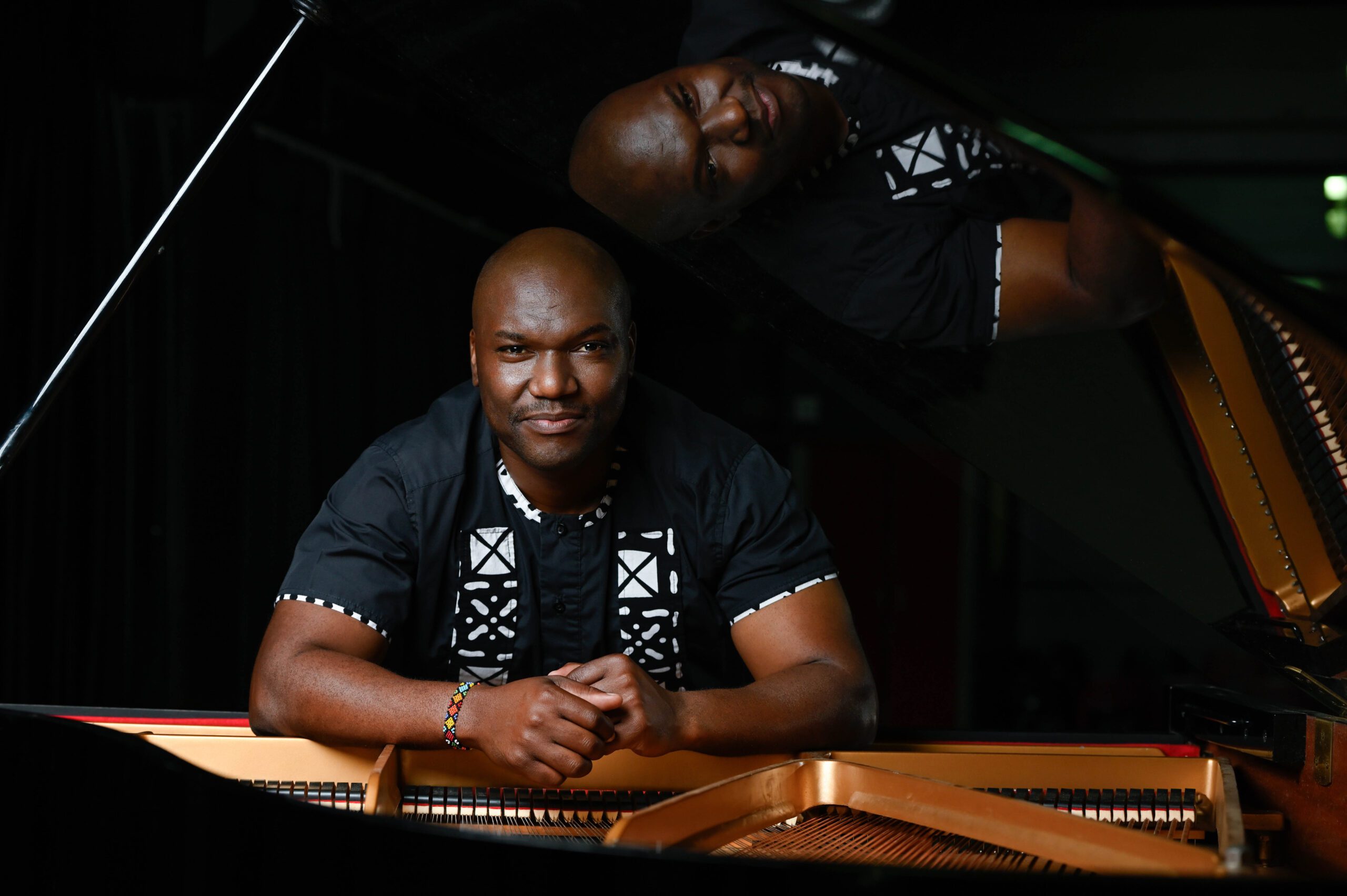
Sibusiso “Mash” Mashiloane has gentle eyes and a
dimpled smile.
A philosopher and academic, he grooves to the music that is his life.
Mash was born in the bountiful farming and mining belt around Bethal in Mpumalanga 40 years ago. He is on a mission to explore his musical roots and conscientious people about cultural
heritage through jazz. He grew up poor but proudly Ndebele
in a diverse neighbourhood with Pedi and Mozambican migrant workers.
“My mother worked in a farm kitchen, and my father was a mechanic and a truck driver. We lived in a big shack and shared everything. Our humble circumstances meant that if our
neighbour played his radio next door, it would sound like it was in my bedroom. It was chaotic but beautiful.”
His childhood consisted of traditional ceremonies and church; his father was a pastor, and his mother was devout.
“It was a prayerful environment. When I say we grew up poor, my family protests. They say we had an endless faith supply,
which shaped me.”
Faith and playing music at the Apostolic Faith Mission church.
Mash and his friends and family went to church to make music. In his late teens, family members chipped in to buy him
his own Casio keyboard.
Mash’s music is a tapestry woven from the threads of his experiences at church and the diverse influences around him.
In 2003, his mom used some of his sister’s labola to send him to study music formally. It was an 11-hour journey by road to Durban, and young Mash resisted big city distractions by seizing the opportunity with both hands.
“I avoided the ways that were not familiar to me when I grew up. My home was so far away, and I was strictly religious, so I pursued the path of righteousness. I was offered one bursary
after another.”
Twenty-one years later, with a bundle of degrees and seven albums under his belt, he defines his journey by a commitment to understanding the music of home. Mash says music is like an accent; it carries meaning. It reflects your life and the range of emotions and circumstances that shaped your background.
“I want to be remembered as an advocate for the sound of home. The purpose of music is to express yourself as authentically as possible in a way that allows music to breathe. You must tap into the moment and be spontaneous instead of just playing the music you learned. Jazz is not meant to sound like this or that.”
Mash’s influences include the maskanda, mbaqanga, and various traditional music he heard as a child. He tells the story of how South African jazz legend Hugh Masekela went to the US, and Dizzy Gillespie warned him against the perils of pop.
He said he would be a statistic if he didn’t tap into the music of home. So, Masekela went home through sounds from the healing songs that Miriam Makeba sang for him. Mash soaks up the sounds around him, pausing in the parks of Durban to take in the Shembe church members playing long horns and drums. It’s all vital communication, a cultural
narrative celebrating heritage — from protest to prayer, all part of a social commentary affirming Africa.
Mash has produced seven albums and has won too many awards to mention. He is on the verge of being awarded his
doctorate, which delves into how local musical dialects and identities have impacted jazz. Mash cherishes his cultural identity but acknowledges music is language and dynamic. It is fluid and stirs your imagination. Melodies, harmonies, and lyrics can tell powerfully emotive stories that help translate feelings.
“To understand the music is to understand the heart.”