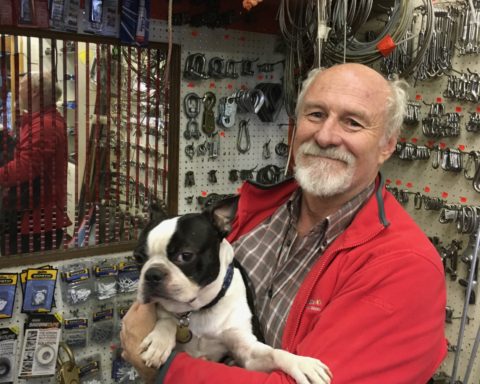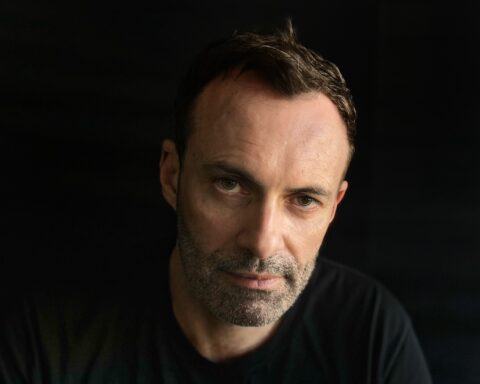

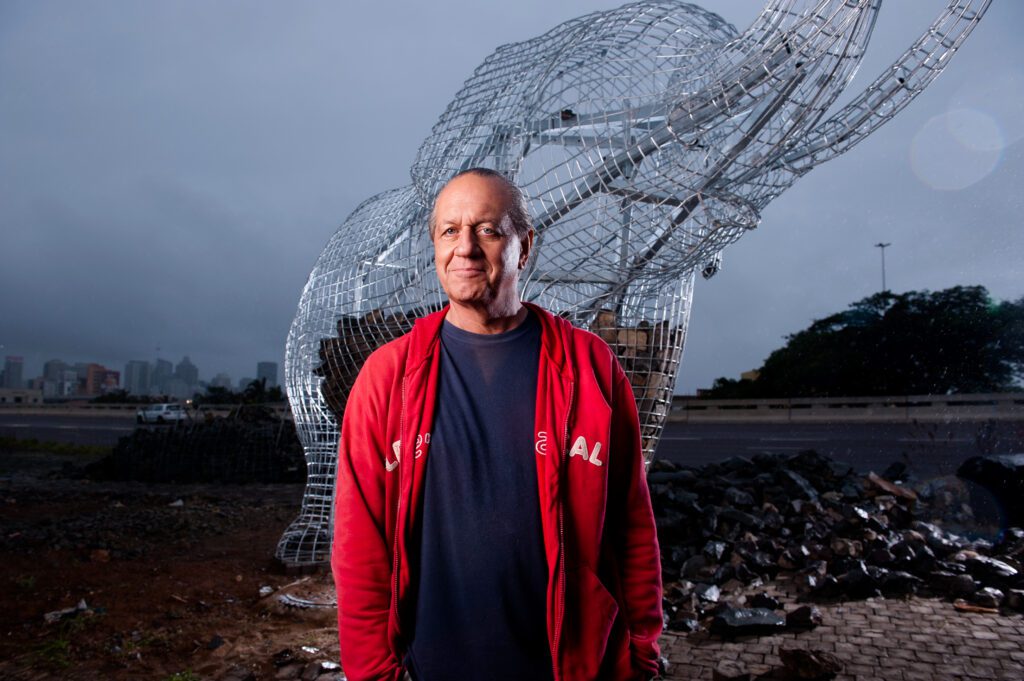

A dude known as boet drives around in a bakkie, mainly on the wrong side of Durban’s Berea. At 72, his grey hair is tied in a man bun that belies his age. He was dubbed an “artthrob” in his younger years. His olive skin still makes his blue eyes more penetrating, and when Andries Botha speaks, he is earnest and articulate. Feted in art circles, he is famous for his sculptures showcased worldwide. But he is known locally for the stone elephants in Warwick Junction in downtown Durban. The elephants, like all good art, have provoked and inspired. About 15 years ago, when the elephants were installed, a big-deal politician demanded they be extracted because he said they symbolised an opposing political party. Gratefully, they weren’t removed. Sadly, they have since been neglected and vandalised in what some might say is a metaphor for the decaying city. But, ironically, they have created a much needed conversation about public art, and the Human Elephant Foundation Andries started. Art has shaped his life, and he is determined to preserve two iconic collections threatened in Durban: works by sculptor Mary Stainbank and a museum dedicated to poet laureate Mazisi Kunene.
Andries has a championing spirit for the arts, undoubtedly motivated by his own struggle. With apologies to the scriptwriters of the Eva Perón movie starring Madonna: Andries had every disadvantage you need if you’re going to succeed. In the 1970s, when he presented himself to the admissions committee at the then-University of Natal to study fine art, he stood out from the other prospective students like a sore thumb. Andries looked nothing like the happening and hip students around him. Wearing a tatty, diesel-stained safari suit, he carried a paper bag and a cardboard box of cartoon sketches for his art school submissions. The bag was filled with money saved from his job as a train ticket collector: his first-year university fees if admitted. This poignant picture sets the tone for a quest about belonging that has come to characterise much of his art. “I was poor white trash, and my dad was an artisan on the railways. He drank too much brandy and raised me in a residential hotel after my mom ran off with another man.” Andries went to George Campbell Technical High School, one road back from Durban’s beachfront.
When his father proudly announced he had secured a job for his son on the railways, Botha junior baulked – something Afrikaans working-class boys simply did not do. “I didn’t realise it then, but it was my father’s gift to me, and I spurned it.” When Andries told his father he wanted to become an artist, the old man, fuelled by the evening’s libations, decked his son with a single punch. When he came to, his clothes had been flung out of the wardrobe. His dad sent him packing with a single line. “Take your shit and fuck off”. Andries slept rough near the harbour before a friend took him in. He reflects on his grand teenage rebellion philosophically and with the kindness that hindsight offers. “I only had a vague concept of art. As a kid, I saw a book with pictures of Michelangelo sculptures. I was astounded. Based on that, I decided what I wanted to do with my life. I began to draw comic characters representing my inner city life.” Sitting among the applicants trying for admission to art school, he remembers smelling sweaty and feeling inadequate. He fumbled forward and presented his comics to an academic panel. But after Andries faltered through a presentation of his work, the professor in charge got up, walked around the table, and shook his hand, welcoming the bewildered part-time ticket collector to the university. Being a working-class Afrikaner made Andries painfully self-conscious. “I grew up pouring my dad too many shunter’s tots. I thought my splintered, dysfunctional Afrikaans, white working class background was a severe disadvantage until I realised that everyone has their struggle.” For Andries, expressions around personal travails and the quest to understand existential questions are inextricably linked to art – and making art accessible. It should help define the national discourse. This is why he joined others like Njabulo Ndebele and Mike van Graan in collaborations around the National Arts Initiative in the early nineties.
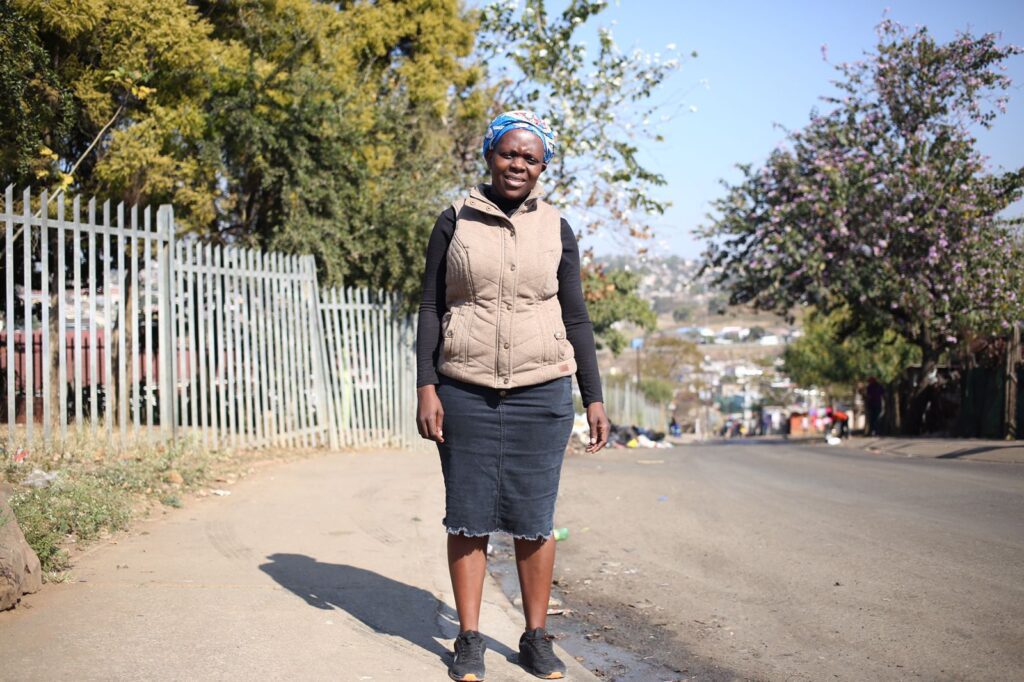
Their recommendations fell on deaf ears.Rather than employ art as a means to empower, Andries says apartheid’s liberators squandered an opportunity to “tenderly unravel our complex history because they have drumbeated art into entertainment”. If art isn’t a prop for a glorified version of liberation politics or a “backdrop for politicians to entertain or campaign”, it doesn’t count for much in their books. Art has to mimic their struggle. In the process, they have turned art into elevator music. Museums are closing down, and support for the arts is waning. The hustle of the ruling elite “is a charade about the provision of houses and toilets and education not delivered, but the looting is structural and epidemic.” In this space, attitudes harden, and there’s little interrogation of ideas. “Instead, we’re in a dark hole arguing crude binaries of haves and have-nots. It is as if they want to obliterate memory in their quest to rewrite it. Where do young people go? Images are flooding in from the US and Europe, or it is this angry Marxist narrative of dispossession and poison framed in victimhood. “The discussion around dispossession is indisputable. But what is valued? This is becoming an emotional wasteland. The government’s failures have so many people living under the jackboot of poverty. Occasionally, we are all rewarded with parades of materialism by the elite. This is empty and banal. Art is where consciousness is. It is not some esoteric business only for the enlightened. It should not be pretentious or tutored and tortured.” Art is an expression of life, your fight to find yourself. Loquacious though he may be, Andries is determined to do more than talk. Although, the talk is compelling. He says, for example, that “eroticism is the troubled relationship between distress and ecstasy.” He is also quoted as saying: “We are all … striving to balance light against dark, force against gentleness, rest with action… Our past inhabits our present, and our future is held hostage to memory.” Back to the doing. Andries is helping Mathabo Kunene, the widow of his old friend Mazisi, who wrote Emperor Shaka the Great. Mrs Kunene has been locked in a tiff with the eThekwini municipality over the costs of a museum in Glenwood dedicated to her husband. It is a long saga, but Andries and the Kunene family are determined to preserve the place where Kunene wrote most of his work. For Mrs Kunene, there’s one light note in the sorry story: Andries. “I was never so mad as I was when I was dealing with eThekwini officials, and I grew up being angry at the Boers. And then there is Andries. When we came back from exile, Mazisi and Andries connected. “I couldn’t get over how Mazisi was always with this Afrikaner. My husband said this man is brilliant.” She tells the story of how Andries once remarked to Mazisi about the peculiarity of their friendship, him being white and the poet being black. Mazisis feigned shock: “Are you white?!”. Astute art critics wax lyrical about Andries Botha’s art. One described it as an expression of humanism and a protest against the abuse of power. Everyone engages with Andries and his art differently. One of his school chums calls him “Boet,” a moniker he’s widely known for. He drives a bakkie and works with his hands six days a week but also easily commands the cocktail circuit.
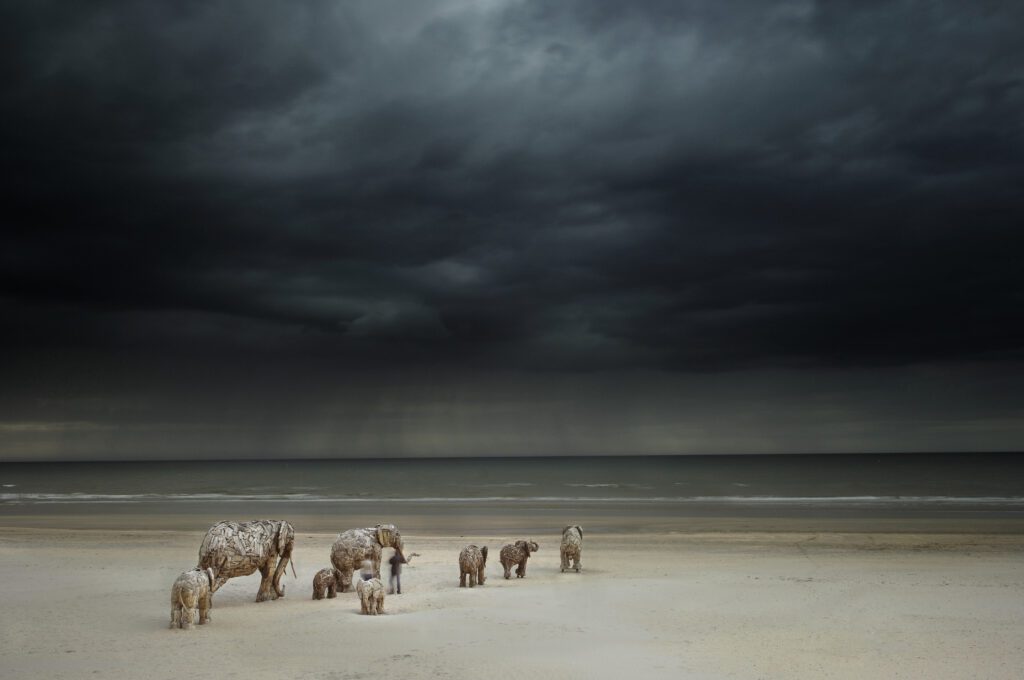
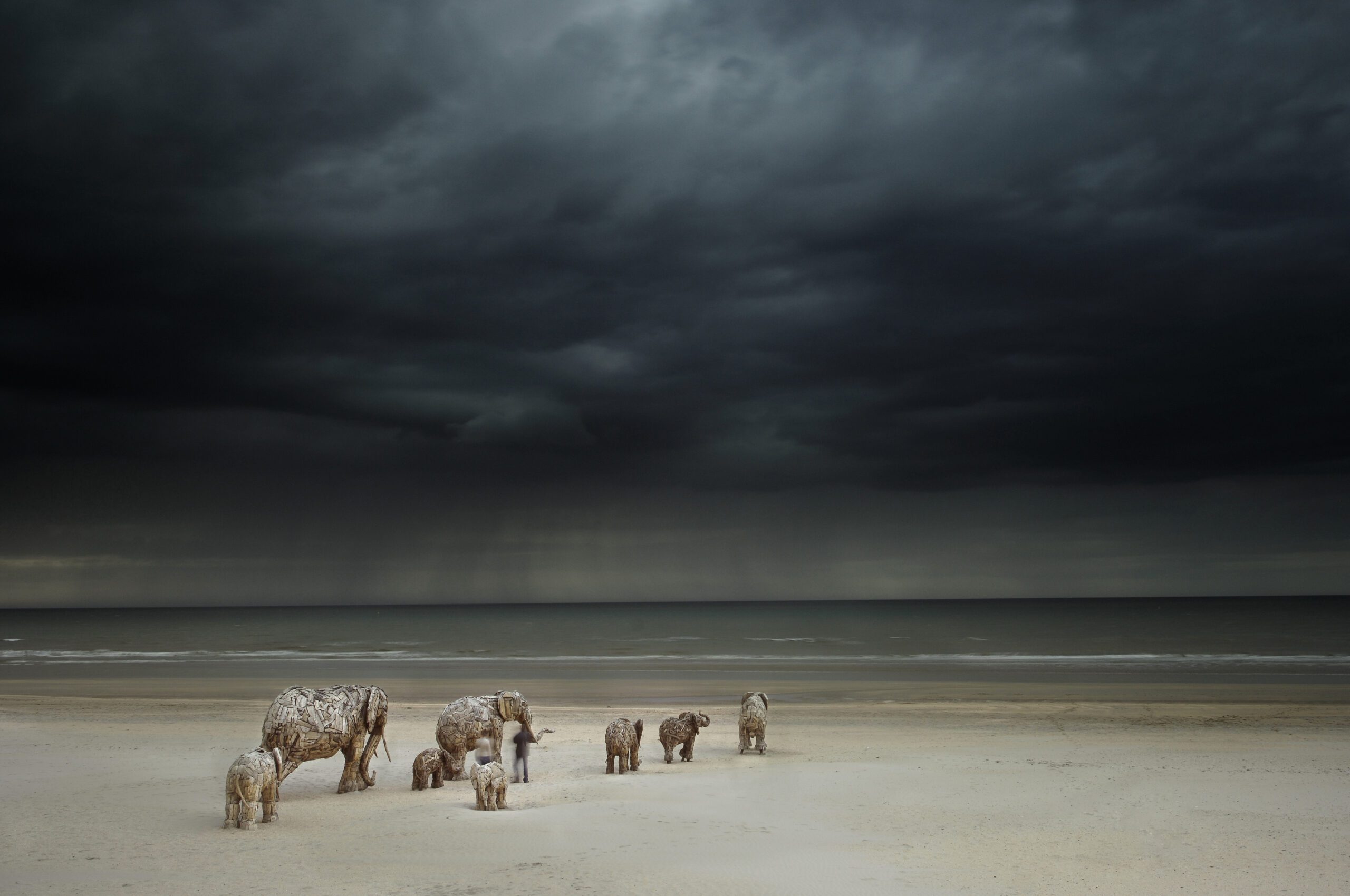
He takes what he does very seriously, but himself, not so much. In the words of Mrs Kunene: “He is always here, in overalls, whenever you need him. He will drop everything. He was with us in Mazisi’s final hours. He has taken care of our family emotionally. He understands that art keeps the soul alive, so we must protect art and legacy.” Botha’s art has been exhibited around the world, but the story of one exhibition stands out. The Nomkhubulwane tour of North America saw his wooden elephant travel 41,000 kms as part of a tour raising environmental awareness. The elephant is one of 14 life-size elephants placed worldwide to catalyse conversations about our faltering coexistence with other living things.
A well-travelled elephant:
- Durban, SA, to Altamira, Mexico (ship)
- Altamira to Merida, Mexico (road)
- Merida to Mexico City, Mexico (road)
- Mexico City to Cuernavaca, Mexico (road)
- Cuernavaca to Juarez, Mexico (road)
- Juarez, Mexico to El Paso, TX, USA (road)
- El Paso, TX to Fayetteville, AR (road)
- Fayetteville, AR to Chicago, IL (road)
- Chicago, IL to Bozeman, MT (road)
- Bozeman, MT to Detroit, MI (road)
- Detroit, MI to Chicago, IL (road)
- Chicago, USA to Durban, SA (ship) (flight distance)
Total: 41,693.6 kms