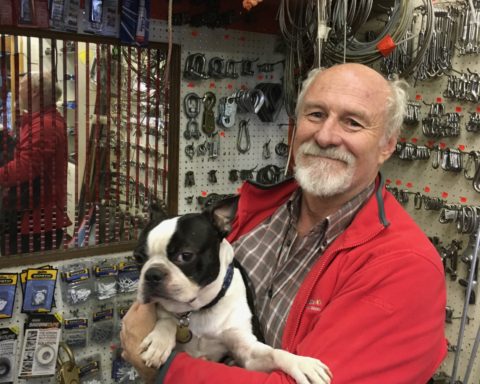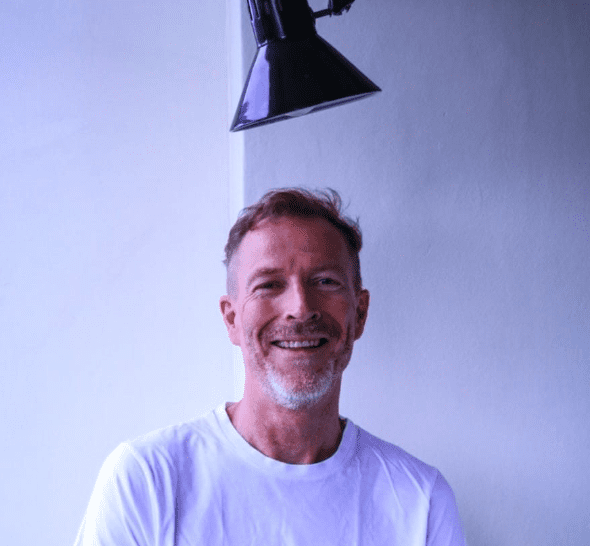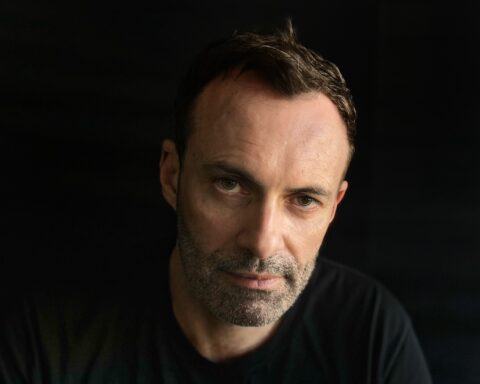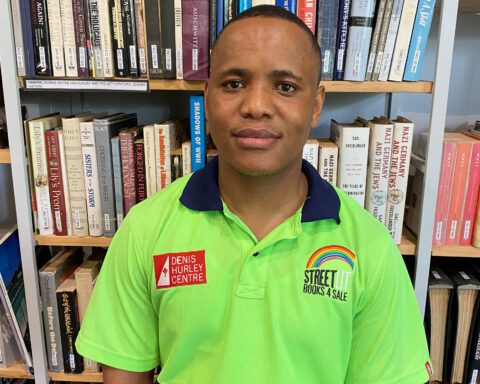


JABU ATCHAR IS A phenomenon who wears a broad smile and a bright red overall.
He is distinct, disarming and magnetic.
Strangers are drawn to snap selfies with the pavement trader from Tembisa who hustled to build a business that now sells 90 tons of pickles a month.
Jabulane Malungane’s story is enchanting because, by all accounts, he shouldn’t have succeeded. Disgraced because he dropped out of university, 21-year-old Jabu fled his parents’ Limpopo home to a shack in Johannesburg where he fixed cell phones and sold paraffin before getting a job at OR Tambo airport.
He worked there for ten years, as a baggage handler, in IT, and later operating an aircraft high loader, but chucked that in to start making mango pickle, or atchar —a product that’s as common as it is competitive, because “you won’t find anyone who loves atchar like me”.
If that sounds crazy, here’s a little background to consider.
Whenever Jabu visited his home in Polokwane he brought atchar back and his friends loved it. It was so popular that he did a sample survey and sold 50 x 1kg buckets of atchar in one day to passersby outside the Tembisa mall near to where he stayed.
That’s when he decided to leave his airport job and make atchar his business.
Jabu’s story has a fairytale quality because he hit rock bottom and bounced back.
A few months into selling atchar outside the mall, things began to shift.
“I listened to the customers until it hurt.”
They wanted a place to get their atchar come rain or shine, so he opened his own shop.
It was his first failure and offered him lessons he still treasures today.
Jabu says he didn’t understand the numbers.
On the streets, he didn’t have to manage staff or stock. With a shop he did, and he floundered months later and was forced to close. Back on the streets, he flourished, earning enough to buy a bakkie.
But that got stolen and the loss of a critical business tool was devastating.
“I wept that night, but when I woke up, I couldn’t just sit there and do nothing so I got on the train and went to buy more oil to make atchar.”
It was a valiant effort, but not enough to overcome the setbacks. A month later Jabu lost his house, which might have been the end of the story had David Swele, a kind neighbour, not offered him a free room.
Jabu separated it into a bedroom and a kitchen and spent three years there, slowly building the business to employ people and build processes to supply customers.
“I didn’t know how to do any of this. You learn as you go.”
Jabu’s self-belief and his loving family sustained him.
As a child, he was exposed to entrepreneurial parents.
“My father, Joseph, was a skilled mechanic, taxi business owner, and firewood seller. My mother, Rachel, was a talented seamstress and snack vendor at our school gate. They taught me the importance of adaptability and hard work. When I was eight, I joined my brother, George, selling fruit and vegetables door-to-door. We collected marula fruits for local beer production. We learnt valuable lessons in customer relations.”
These formative experiences helped formulate his plan.
“If you have a vision it will keep you going even when you can’t keep yourself going. Your vision will wake you up. I am not just selling atchar. I am building a legacy.”
Fundamental to that legacy is helping others. “I’m not smarter than anyone else. I didn’t choose entrepreneurship, it chose me. I didn’t want to experience going to bed hungry and I don’t want anyone else to. Imagine how many people in South Africa feel like that? Somebody helped me so I must help.”
A turning point in Jabu’s journey was the kindness of David Swele who gave him a place to stay.
Another was meeting an agent for the fintech company iKhokha.
The man tried to sell him a machine to accept mobile payments, but Jabu wasn’t convinced and only gave the agent an ear on his third visit.
“I listened and realised this guy knew what he was talking about. When I told him all about my business he said, ‘I have to tell my boss about you.’ And then his boss came to visit and he said, ‘I have to tell my boss about you.’ And then Ramsay came to visit me.”
Ramsay Daly and Matt Putman started iKhokha (the isiZulu word for pay) to service Jabu and 40 000 other businesses with cumulative daily turnover of R10 million.
iKhokha’s offering has extended from cashless payments to a suite of products to help entrepreneurs alleviate pain points and grow. This includes loans for cash flow, which helped build Jabu Atchar into a business that supplies supermarket chains in South Africa, Lesotho and Botswana.
iKhokha harnessed the motivational power of Jabu’s story by making a documentary toasting his inimitable appeal and branding flair.
“Branding sets you apart. I put this logo on my clothes because I use the best quality ingredients and my brand is not cheap. I put my own name in my brand to tie myself to this brand. That way I don’t make mistakes.”
The brand, beyond the simplicity of reliably tasty atchar, is Jabu’s story entwined with the community he serves. It has made him a motivational speaker and a role model with a simple and accessible business philosophy. He talks in catchy sound bites.
“I concentrate on three things: mindset, skills set and the rules.
“Everybody has chances and choices.
“You will almost always get what you deserve in life. To get more you must add more value.”
Reflecting on his growth, Jabu says: “People see this guy in his overalls and they listen because this is the real me. When I started my business I didn’t know how to speak English properly, but I have learned so much. I have a template for entrepreneurs.”
Jabu’s personality is contagious and he makes an immediate connection with people. His story is inspiring, but also important in a country where small and medium-sized enterprises sustain millions of livelihoods and contribute 28% to tax revenue. Entrepreneurs like Jabu can shape a future of dignity and hope.
“I didn’t climb to the top of the mountain to be seen, I did it to see people I can help. I want to empower them. I am loving and caring. In business that can cost you money because some people take advantage. But, my vulnerability is my biggest strength. I am like an ambulance. I crywhen I go forward. Jabulane means rejoice. I didn’t choose that name, it was given to me. God gave me gifts and I am grateful to share what I know.”
Matt Putman, iKhokha CEO, says: “iKhokha was founded by entrepreneurs for entrepreneurs. Starting this business presented an opportunity to build a platform, an offering, a community to uplift entrepreneurs and help guide them into this fast-evolving digital world. We process billions of rands in digital card payments every month and annually we advance nearly a billion rand in working capital to help small businesses grow. SMEs are South Africa’sreal heroes.”